

A design trend is a proposal about how a room should look, made by people who will not be living in it. Some of them are worth taking. The useful skill is telling which.
A trend is a proposal, not an instruction
Every year produces a new consensus about kitchens, and every year some of it turns out to have been about photography rather than about living in a house.
That is not an argument for ignoring trends. Plenty of them are real improvements that happen to arrive in fashion's packaging, and refusing them on principle produces a house that looks dated in a different direction.
It is an argument for a test. A trend is worth following when the reason it looks good is also the reason it works. When the only available reason is that it is current, you are buying a date stamp.
Start with what the light here does
Vancouver's light is the most reliable fact available to anyone choosing a finish here, and it is doing something specific. For much of the year it arrives diffused through cloud, from a low angle, with very little of the hard directional sun that southern interiors are photographed in.
Flat, cool light is unflattering in a particular way. It finds every reflection and it drains warmth out of a surface. Finishes chosen from a photograph taken somewhere brighter tend to arrive looking colder and harder than expected.
Which turns several of the current preferences into something better than preferences.
- Matte and honed surfaces hold their colour under overcast light, where gloss turns into a grey mirror of the window
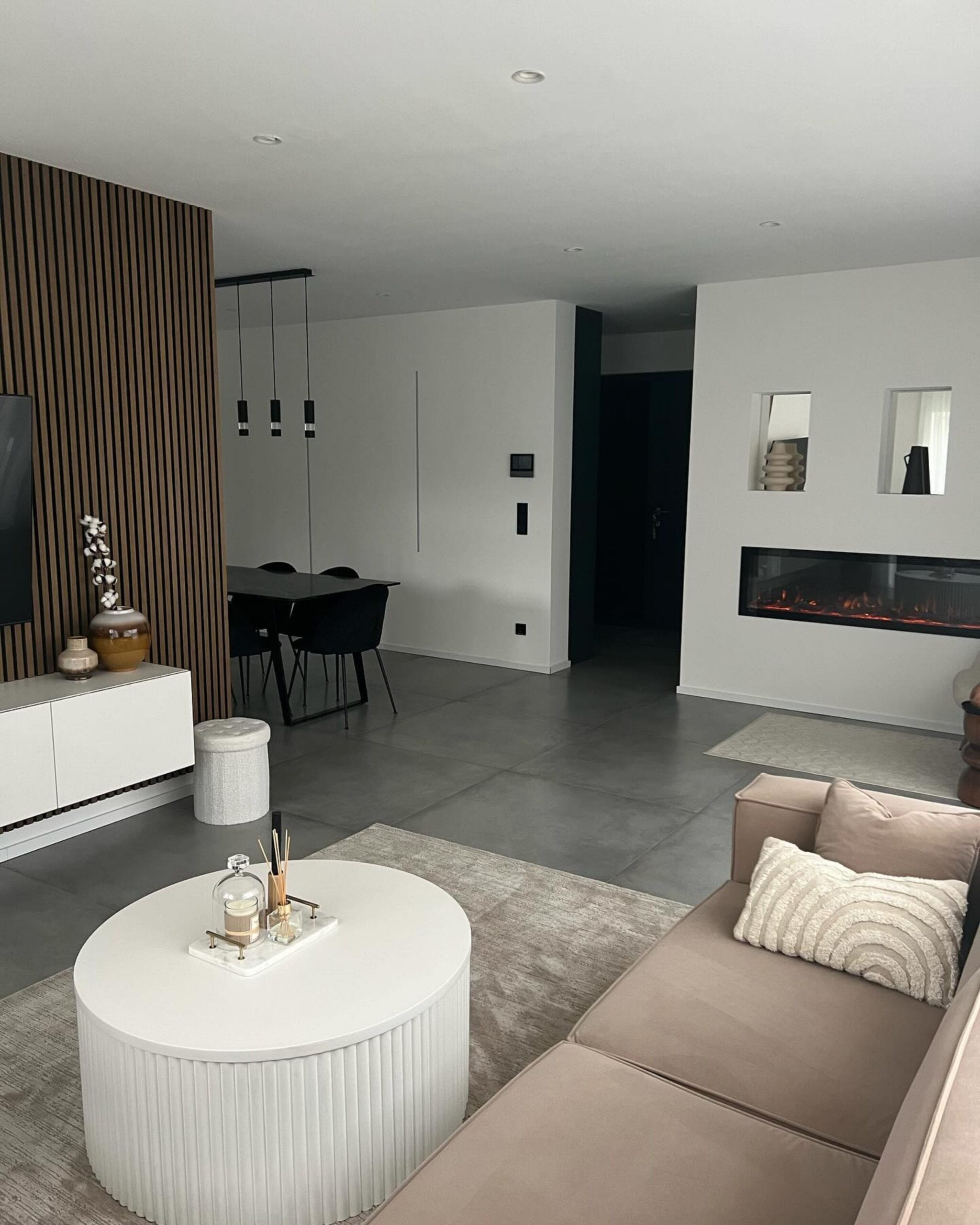
- Warm neutrals read as neutral here; a cool white reads blue, and a north-facing room makes that worse
- Timber and stone with visible grain give the eye something to read when the light itself gives it nothing
- Texture does the work that contrast does elsewhere, which is why a flat white room feels empty here and busy in stronger sun
- Layered light at low level beats a ceiling grid, because the sky is already a flat overhead source and more of it does not help
- Deep colour survives better than it is given credit for, since a dim room is not rescued by painting it pale
None of that is this year's taste. It is the behaviour of a surface under a particular sky, and it will be true for as long as the weather is.
Three kinds of Vancouver house
The second durable fact is what we have to work with. Vancouver's residential stock is mostly pre-war houses with good proportions and small rooms, post-war houses with generous rooms and no detail, and apartments with a view and no walls to spare.
Each one wants something different, and the trend that suits one actively damages another.
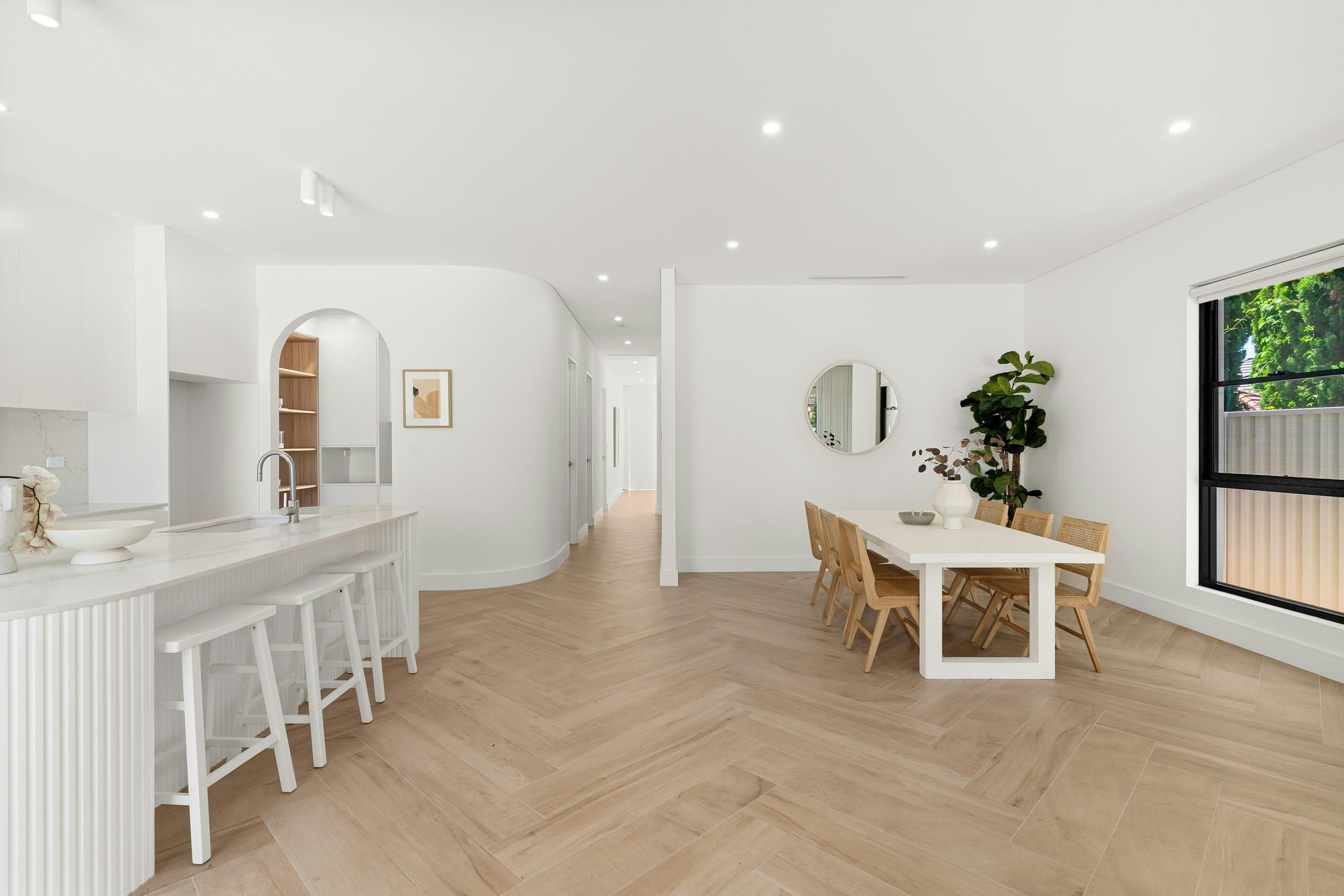
In a pre-war house the proportions are the asset. The rooms were drawn with a ceiling height, a window position and a trim depth that agree with each other. Remove every wall between them and the volume has lost the reason it looked good.
The better move in that house is usually fewer, wider openings rather than none at all, so the rooms still read as rooms from inside each other.
A post-war house is the opposite problem. The volume is already there and the detail is not, so it rewards built-in millwork, a considered ceiling and material that gives a plain room something to be.
An apartment rewards restraint and storage, in that order. There is no surface area to spare for a feature, and the storage is the feature once you live in it.
Fixed decisions and loose ones
The most practical way to think about a trend has nothing to do with the trend. It is to ask how expensive the decision is to reverse.
Follow fashion freely in the loose column. Be conservative in the fixed one, because that is where a dated choice becomes a renovation rather than a Saturday.
How hard is it to undo
The same style question gets a different answer depending on which column it lands in. A colour on a wall and the same colour fired into tile are not the same decision.
Fixed, and expensive to change
- Layout, openings, ceiling heights and where the light comes from
- Tile, stone and anything grouted or set in mortar
- Cabinet carcasses, the island, and where the services run to
- Window profiles, sizes and glazing bars
- Flooring across the whole floor plate
- Where the sockets, switches and lighting circuits are
Loose, and cheap to change
- Paint, in any colour you are curious about
- Cabinet doors and fronts on carcasses that stay
- Handles, taps, hinges and visible hardware
- Light fittings on circuits that are already right
- Upholstery, rugs, art and everything that is not screwed down
- Splashbacks, when they are a single reachable panel rather than a tiled field
Follow the fashion in paint, hardware and light fittings. Be slow about anything set in mortar, and the house will age at a pace you choose.
What ages badly, and why
Things do not date because they were popular. They date because of a specific mechanism, and the mechanisms repeat.
Five reliable ways to date a room
- A shape with no function
- A profile, a curve or a bevel that exists only as a signature reads as the year it was chosen. The same detail survives when it is doing something, like softening a corner people walk past.
- Colour committed in a hard material
- A fashionable colour is harmless on a wall and permanent in a tile, a worktop or a stone floor. The cost of changing your mind is set by the material, not the colour.
- A finish chosen against the light
- High gloss, cold white and mirror-polished metal all fight an overcast sky. They look wrong long before they look old, and most people read that as dated.
- A layout built around an appliance
- Appliances get replaced on a cycle of their own. A kitchen whose geometry depends on one particular machine inherits that cycle whether or not you want it to.
- One idea applied everywhere
- A material or a motif repeated through every room stops being a choice and becomes a scheme. Schemes date as a unit, which is also how they have to be undone.
Four questions that sort one from the other
- Does it solve something you actually complain about? A zoned room, a quieter floor, a shower you can walk into without a step. If it answers a complaint, it is not really a trend.
- Would you still want it if it were ordinary? Strip the novelty out and see whether anything is left. Plenty survives this and some of it does not.
- Is it fixed or loose? If it is loose, stop deliberating and try it. If it is fixed, make it earn the permanence.
- Does it suit this house, or the house in the photograph? A detail borrowed from a different era of building usually announces exactly where it came from.
The part that is not a trend
One thing on every current list is not a trend at all, and it is the one worth taking seriously: designing for how long you intend to stay.
A shower without a step, a wider door, a landing with room to turn, blocking in a wall where a handrail might go later. These are cheap while the wall is open and awkward afterwards, and none of them has to look clinical.
The same logic covers the services. Capacity in the panel, a conduit to the driveway, a run left where a future machine will want one. You are not predicting the future, you are declining to make it expensive.
That is the honest version of what every trends article is reaching for when it says timeless. Not a style that never dates, which does not exist, but a house where the things that date are the things you can change.